There is a particular way the word Indaba arrives in modern conversations. It is invoked, often, as a slogan — pinned to a wall in a corporate office, dropped into a leadership keynote, printed on a tote bag. Indaba and the Difficult Manager? The slogan version of Indaba is easy to admire and easy to ignore. The actual concept, the one that has shaped Zulu / Southern African life for generations, is harder. It demands more. And it is, I think, more useful.
What Indaba Actually Means
Translators usually settle on something like: Indaba is a Zulu and Xhosa word for a council meeting — historically of elders, today of any group that needs to make a decision worth keeping. The form has been borrowed by international climate negotiators, corporate boards, and community organisations because of one quality: it produces decisions that hold. It does this by refusing the Western meeting model — the loudest voice, the rushed vote, the unread minutes — in favour of structured listening, ritualised speech, and visible consensus. It is a defensible translation. But translation is the surface. Indaba carries underneath it a set of assumptions — about what a person is, what owes what to whom, and what success even means — that the English sentence cannot deliver.
Two heads are better than one.African proverb
The Question This Post Is About
A composite case: the manager whose problem Indaba would diagnose differently. The question is worth taking seriously, because Indaba is one of those concepts that loses its shape when handled carelessly — and recovers it as soon as the reader is willing to slow down and listen.
Take a small, ordinary case. A team of nine. A project that was supposed to take a quarter is now in its second. The manager has the option to find a single person to assign blame to and to move on. The Indaba reading offers a different question: what did we, as a team, fail to make possible for the person carrying this work? The most senior person speaks last, not first. The case is not unusual. The reading of it, in the spirit of Indaba, is.
A Second Angle
Notice what the case is not asking. It is not asking who is to blame. It is not asking how to make the situation more efficient. It is asking what Indaba would have us do here, with these particular people, in this particular knot. The most senior person speaks last, not first. The discipline of asking the Indaba question — instead of the efficiency question, or the blame question — is what changes a working life over years.
Where the Concept Resists
Indaba is sometimes presented as the answer to the diseases of Western individualism. It is not, exactly. It is a different answer to a different question. Pretending it is a drop-in replacement for the modern self-help bookshelf does Indaba a disservice — and the reader, too. The work of taking it seriously is harder than that.
What to Do With This
What can you do with this? Begin small. Choose one place — one meeting, one relationship, one daily ritual — and run it through Indaba for a month. Not as a project. As a quiet experiment. Notice what changes. Indaba is not learned by reading; it is learned by repetition.
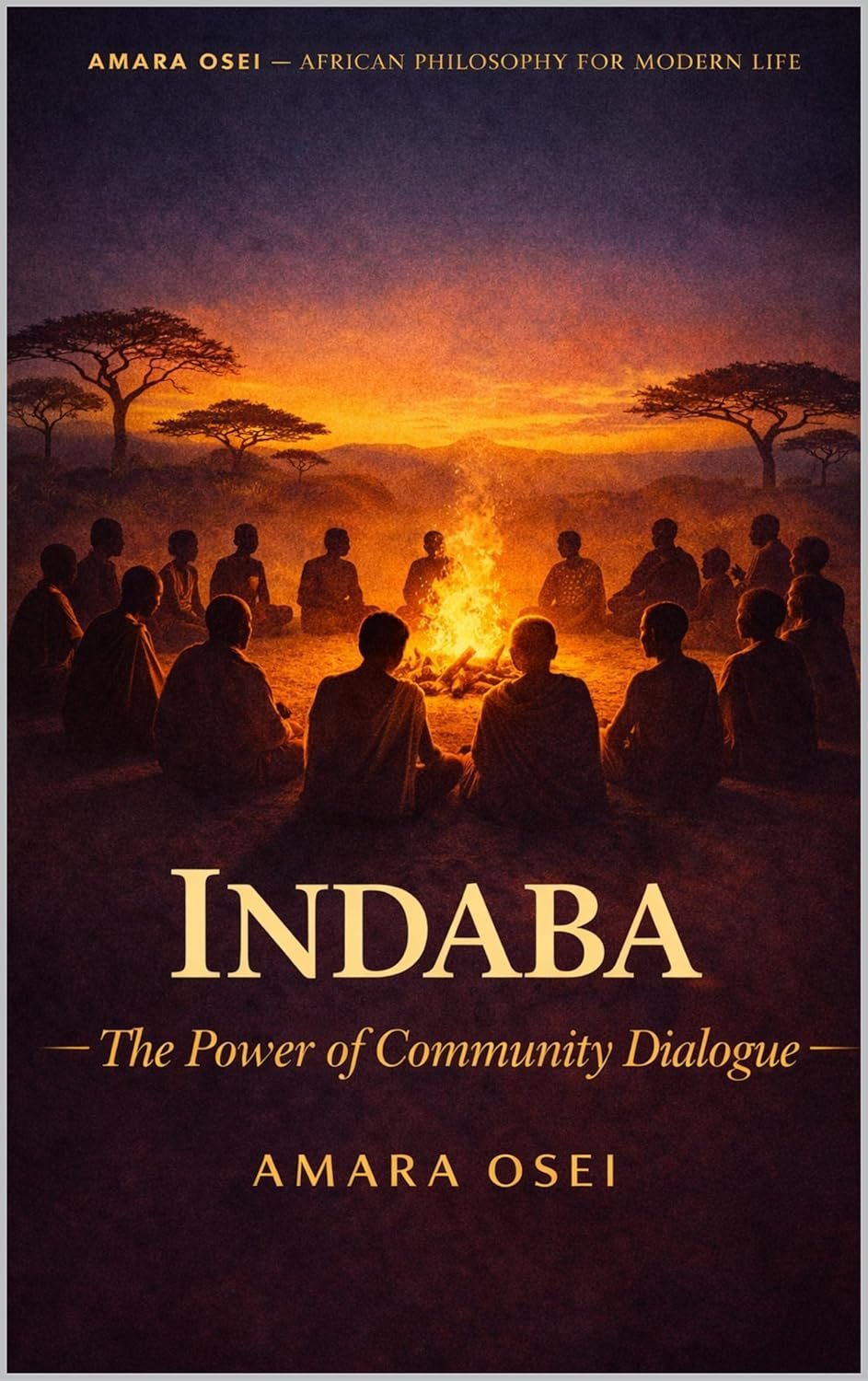
The full philosophy, as a book
How to run meetings where everyone is heard — and the decisions you make actually stick.
Read on Amazon