I want to begin with a memory that is not mine but has been told to me many times. A dispute between two families has dragged on for a year. The elders call an indaba. They sit in a circle from morning until dusk. The elders speak last. By nightfall, the dispute is resolved — not because anyone won, but because everyone has been heard. Whether or not it ever happened, the memory teaches what Indaba is — better than any definition does. Indaba for Consultants? The story is the answer.
What Indaba Actually Means
Let me give the canonical definition first, then try to do a little better. Indaba is a Zulu and Xhosa word for a council meeting — historically of elders, today of any group that needs to make a decision worth keeping. The form has been borrowed by international climate negotiators, corporate boards, and community organisations because of one quality: it produces decisions that hold. It does this by refusing the Western meeting model — the loudest voice, the rushed vote, the unread minutes — in favour of structured listening, ritualised speech, and visible consensus. The canonical version is correct but tame. The full version of Indaba is less polite, more demanding, and more interesting. It does not flatter the reader who has just discovered it.
If you want to know the end, listen to the beginning.Yoruba
The Question This Post Is About
What changes when consultants take Indaba seriously. The question is worth taking seriously, because Indaba is one of those concepts that loses its shape when handled carelessly — and recovers it as soon as the reader is willing to slow down and listen.
If you take Indaba seriously at work, the first thing that has to change is the meeting. Not its agenda — its shape. Western meetings are optimised for speed and for the loudest contributor. Indaba is optimised for something else: for the quality of decisions that hold. Disagreement is recorded in the minutes, not absorbed by majority rule. The trade-off is real. Meetings under Indaba take longer. The decisions also unstick less often.
A Second Angle
For the person living far from Southern Africa — in a city of strangers, in a flat of one, in a job that has nothing to do with the village they came from — Indaba can feel like it belongs to someone else's life. It does not. The diasporic reading of Indaba is not a watered-down version. It is a different test of the same idea. Disagreement is recorded in the minutes, not absorbed by majority rule.
Where the Concept Resists
It would be dishonest to pretend Indaba is uncomplicated. The concept can be — and has been — used to suppress dissent in the name of harmony, to extract unpaid labour from women in the name of community, and to soften criticism that should have been sharper. Any serious reading of Indaba has to hold these uses in view. The concept survives the criticism. But it is not innocent.
What to Do With This
If you are new to Indaba, the most useful place to start is not with a study or a course but with a question, asked of yourself, at the end of an ordinary day: who held me up today, and whom did I hold? Sit with the answer. Do not improve it yet. The concept will deepen on its own, repeated, over weeks. This is how Indaba actually enters a life.
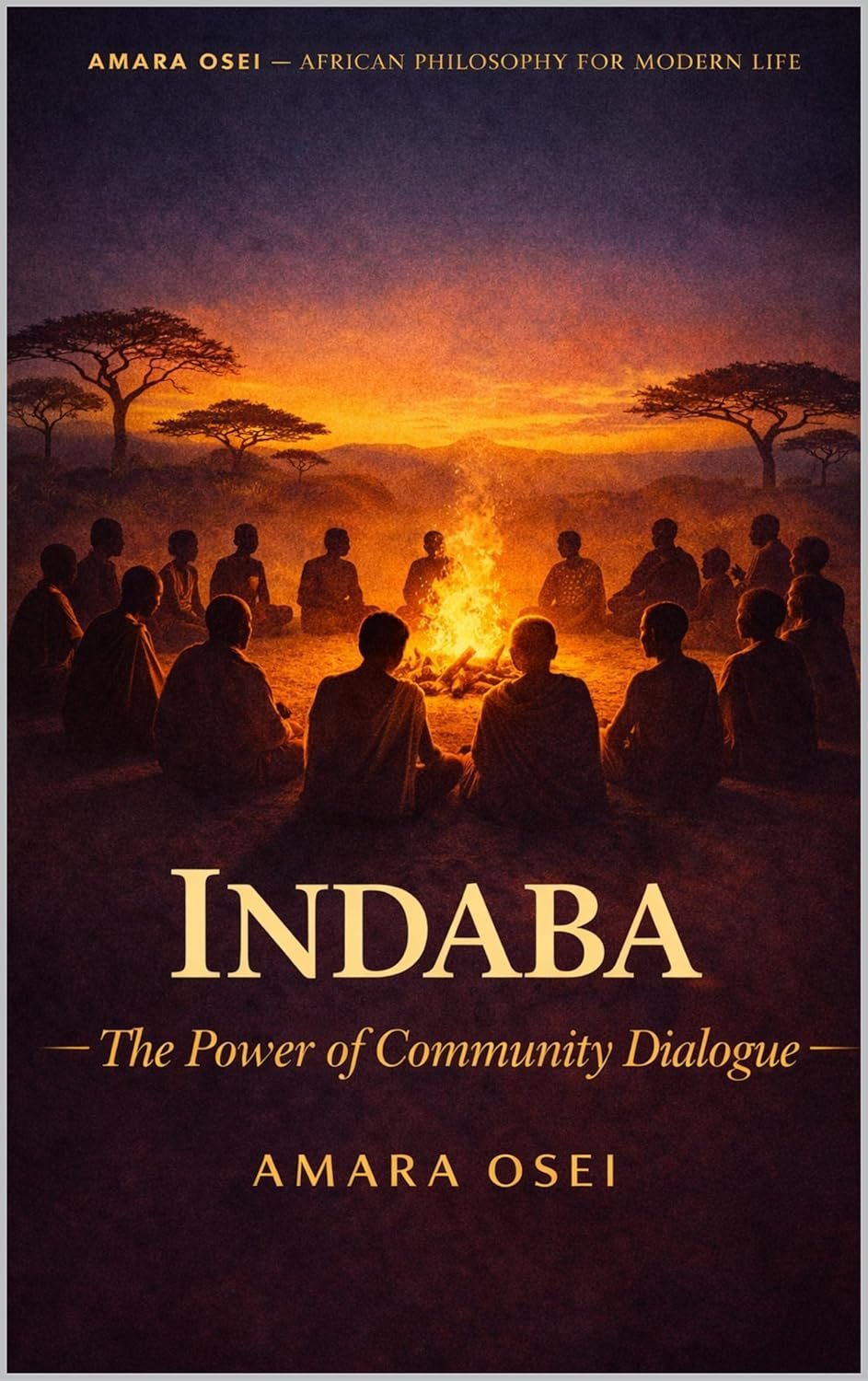
The full philosophy, as a book
How to run meetings where everyone is heard — and the decisions you make actually stick.
Read on Amazon