Most of what is written about Indaba in English is wrong. Not maliciously — usually it is wrong because Indaba resists translation, because the concept does not match neatly onto Western categories, because the writers are working with a sentence-long summary instead of a tradition. Indaba vs Self-Made Success? This essay is one attempt at a more careful answer.
What Indaba Actually Means
Indaba is a Zulu and Xhosa word for a council meeting — historically of elders, today of any group that needs to make a decision worth keeping. The form has been borrowed by international climate negotiators, corporate boards, and community organisations because of one quality: it produces decisions that hold. It does this by refusing the Western meeting model — the loudest voice, the rushed vote, the unread minutes — in favour of structured listening, ritualised speech, and visible consensus. This much is on Wikipedia and in introductory leadership books. What is harder to find — and harder to translate — is the texture of the concept: the way Indaba shapes a thousand small daily choices in a Zulu / Southern African household, and how those choices accumulate into a different shape of life.
Two heads are better than one.African proverb
The Question This Post Is About
The myth of the self-made — and what Indaba corrects without dismissing effort. The question is worth taking seriously, because Indaba is one of those concepts that loses its shape when handled carelessly — and recovers it as soon as the reader is willing to slow down and listen.
There is a specific application of Indaba that managers rediscover every few years and act surprised to find: the practice of asking, before any consequential decision, who has not yet been heard from. The question seems procedural. It is not. It is a small Indaba act, repeated, that changes the temperature of an organisation over years. Meetings end with the convener summarising what was decided and asking each person whether they recognise the summary.
A Second Angle
The comparison is not symmetric. Indaba did not develop in dialogue with the Western frameworks it now sits beside on a bookshelf. It developed inside Zulu / Xhosa life, answering questions that Zulu / Xhosa life kept posing. To ask whether Indaba is "better than" individualism, or stoicism, or productivity culture, is to ask the wrong question. The right question is narrower and more useful: what does Indaba see clearly that the framework I currently use does not? Meetings end with the convener summarising what was decided and asking each person whether they recognise the summary.
Where the Concept Resists
There is a real risk in romanticising Indaba. The Zulu / Southern African traditions that produced it have always also produced internal critics — voices warning against the misuse of communal philosophy to demand conformity, to silence the young, to protect bad behaviour by elders. The honest defender of Indaba keeps those critics at the table.
What to Do With This
The reading you have just done is one entry into Indaba. There are many others. Zulu / Xhosa elders, Southern Africa writers, and the daily life of communities that have lived this concept for centuries are richer sources than any essay. Treat this as a doorway, not a destination.
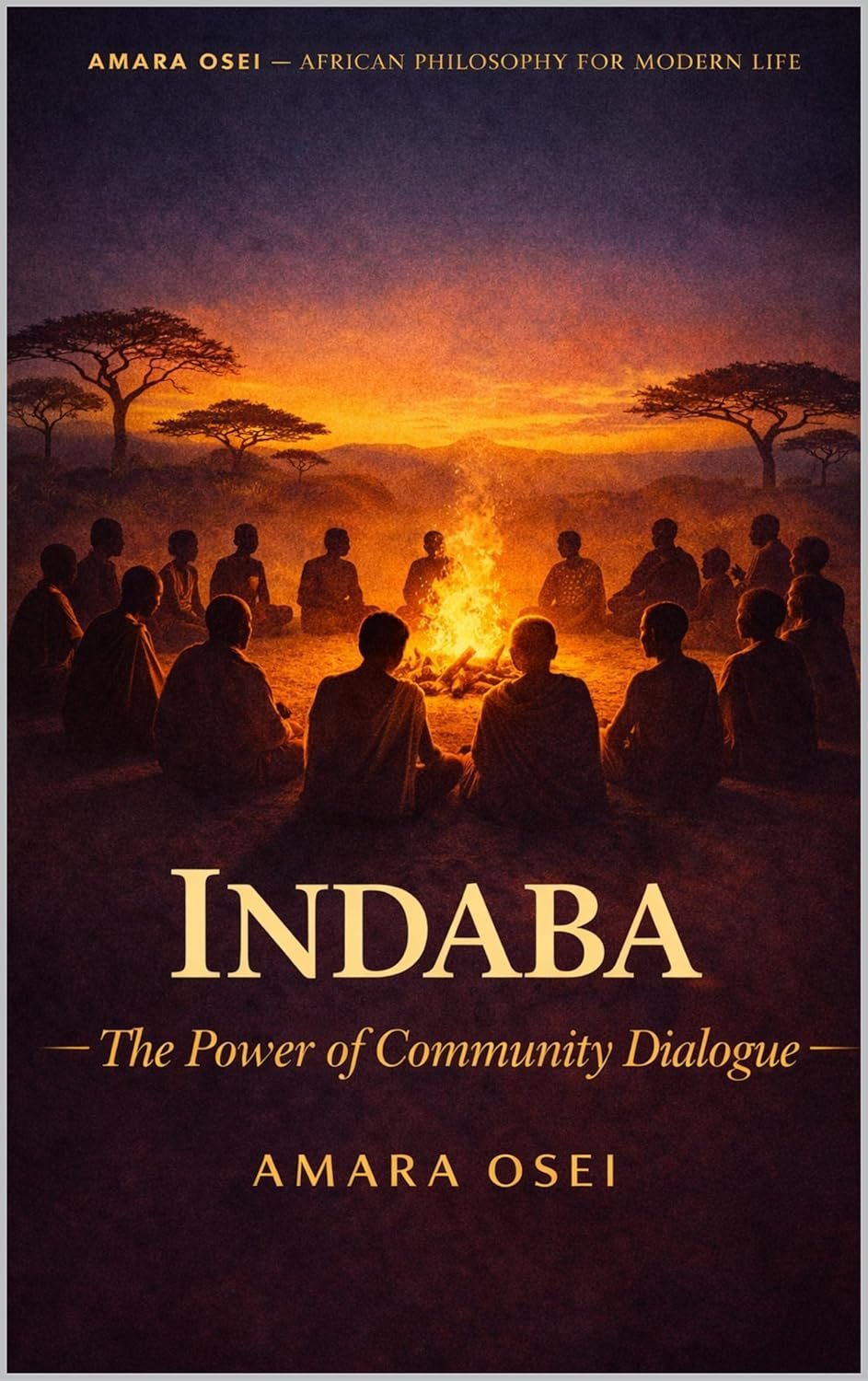
The full philosophy, as a book
How to run meetings where everyone is heard — and the decisions you make actually stick.
Read on Amazon