There is a particular way the word Sankofa arrives in modern conversations. It is invoked, often, as a slogan — pinned to a wall in a corporate office, dropped into a leadership keynote, printed on a tote bag. Sankofa and the Long Recovery? The slogan version of Sankofa is easy to admire and easy to ignore. The actual concept, the one that has shaped Akan / Ghanaian life for generations, is harder. It demands more. And it is, I think, more useful.
What Sankofa Actually Means
Translators usually settle on something like: Sankofa is an Akan word and a symbol — most often a bird with its head turned backward, holding an egg in its beak. The egg is the future; the head turned backward is the past. Together they teach a simple, demanding idea: it is not wrong, nor shameful, to go back and fetch what you forgot. The future cannot be built on amnesia. It is a defensible translation. But translation is the surface. Sankofa carries underneath it a set of assumptions — about what a person is, what owes what to whom, and what success even means — that the English sentence cannot deliver.
Wisdom is like a baobab tree; no one individual can embrace it.Akan
The Question This Post Is About
Returning to life after illness, divorce, or loss — through the lens of Sankofa. The question is worth taking seriously, because Sankofa is one of those concepts that loses its shape when handled carelessly — and recovers it as soon as the reader is willing to slow down and listen.
Parenting through Sankofa is not soft parenting. The phrase 'it takes a village' has been so domesticated in English that it now means almost nothing. The Akan / Ghanaian version is sharper: the child is not yours alone, and the discipline of raising them well is not yours alone either. Every project begins by reading the postmortems of the previous three.
A Second Angle
If you take Sankofa seriously at work, the first thing that has to change is the meeting. Not its agenda — its shape. Western meetings are optimised for speed and for the loudest contributor. Sankofa is optimised for something else: for the quality of decisions that hold. Every project begins by reading the postmortems of the previous three. The trade-off is real. Meetings under Sankofa take longer. The decisions also unstick less often.
Where the Concept Resists
There is also the question of authority. Who gets to speak for Sankofa? The traditions in which it lives are old, plural, sometimes in disagreement with each other. Anyone — including the writer of this essay — who claims a definitive reading is overreaching. The careful reader treats every restatement of Sankofa, including this one, as one voice among many.
What to Do With This
The reading you have just done is one entry into Sankofa. There are many others. Akan elders, Ghana, West Africa writers, and the daily life of communities that have lived this concept for centuries are richer sources than any essay. Treat this as a doorway, not a destination.
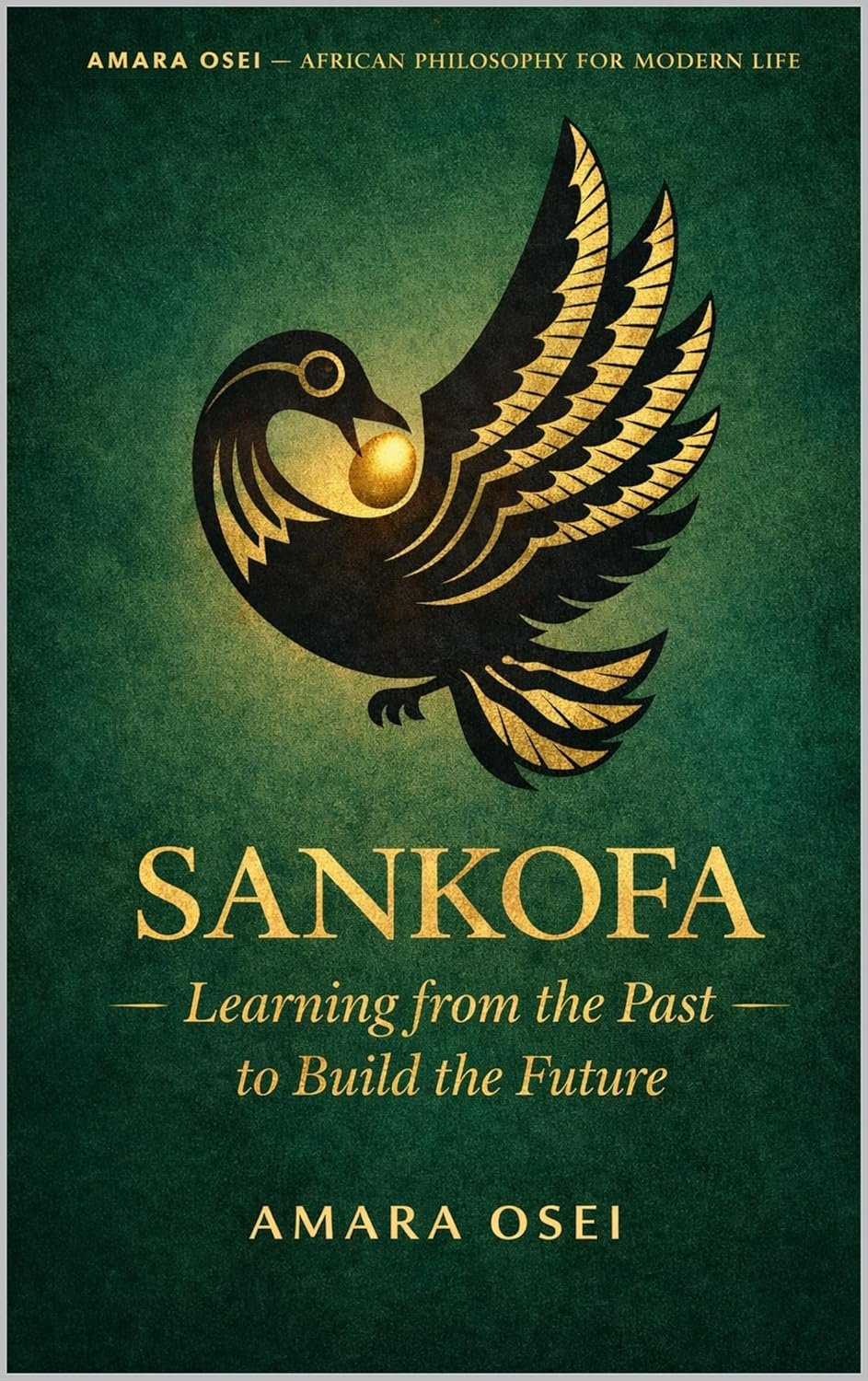
The full philosophy, as a book
How to use your history, your failures, and your traditions as fuel rather than baggage.
Read on Amazon