Teranga vs Self-Made Success? It is the kind of question that admits of two answers — a quick one and a true one. The quick answer is that Teranga means radical hospitality. the senegalese philosophy of welcome — generosity not as performance but as a way of being. The true answer takes longer, because Teranga is not really a concept; it is a way of seeing.
What Teranga Actually Means
Translators usually settle on something like: Teranga is a Wolof word that does not translate cleanly. The closest English approximation is hospitality, but it is hospitality elevated to a defining cultural virtue. It is why Senegal calls itself 'the land of teranga.' It is the reflex to feed a stranger, to seat them, to ask after them. In the modern world it is also a strategy — for sales, leadership, customer experience, and any practice that depends on people choosing to come back. It is a defensible translation. But translation is the surface. Teranga carries underneath it a set of assumptions — about what a person is, what owes what to whom, and what success even means — that the English sentence cannot deliver.
A guest is a blessing.Wolof
The Question This Post Is About
The myth of the self-made — and what Teranga corrects without dismissing effort. The question is worth taking seriously, because Teranga is one of those concepts that loses its shape when handled carelessly — and recovers it as soon as the reader is willing to slow down and listen.
There is a specific application of Teranga that managers rediscover every few years and act surprised to find: the practice of asking, before any consequential decision, who has not yet been heard from. The question seems procedural. It is not. It is a small Teranga act, repeated, that changes the temperature of an organisation over years. Every meeting begins with one minute of acknowledgement before any agenda item.
A Second Angle
The comparison is not symmetric. Teranga did not develop in dialogue with the Western frameworks it now sits beside on a bookshelf. It developed inside Wolof life, answering questions that Wolof life kept posing. To ask whether Teranga is "better than" individualism, or stoicism, or productivity culture, is to ask the wrong question. The right question is narrower and more useful: what does Teranga see clearly that the framework I currently use does not? Every meeting begins with one minute of acknowledgement before any agenda item.
Where the Concept Resists
It would be dishonest to pretend Teranga is uncomplicated. The concept can be — and has been — used to suppress dissent in the name of harmony, to extract unpaid labour from women in the name of community, and to soften criticism that should have been sharper. Any serious reading of Teranga has to hold these uses in view. The concept survives the criticism. But it is not innocent.
What to Do With This
If you are new to Teranga, the most useful place to start is not with a study or a course but with a question, asked of yourself, at the end of an ordinary day: who held me up today, and whom did I hold? Sit with the answer. Do not improve it yet. The concept will deepen on its own, repeated, over weeks. This is how Teranga actually enters a life.
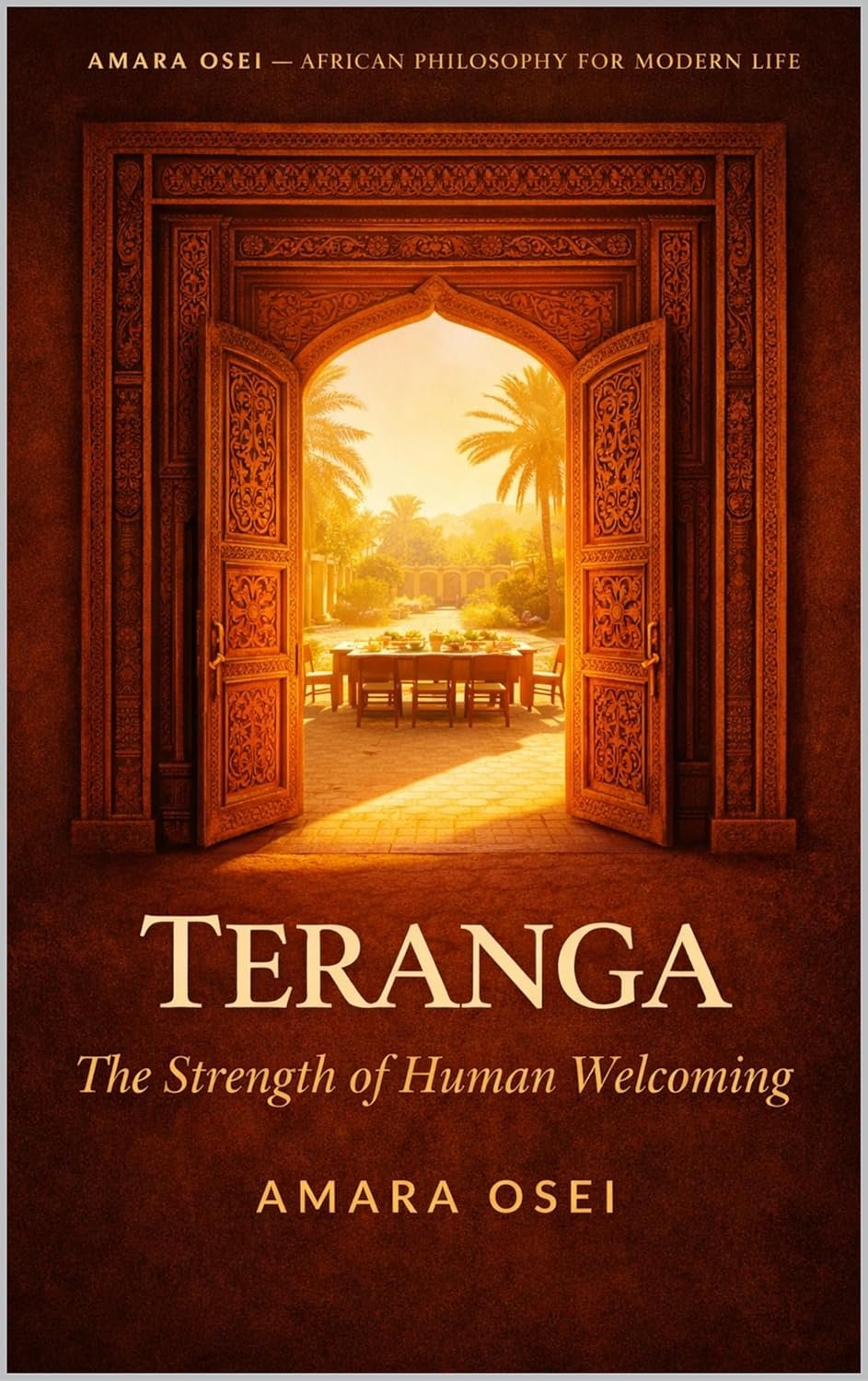
The full philosophy, as a book
The Senegalese philosophy of generosity as strategy — in business, sales, leadership, and life.
Read on Amazon