A Praise-Poem for Ubuntu? It is the kind of question that admits of two answers — a quick one and a true one. The quick answer is that Ubuntu means i am because we are. the southern african philosophy of shared humanity — the recognition that a person is a person through other people. The true answer takes longer, because Ubuntu is not really a concept; it is a way of seeing.
What Ubuntu Actually Means
Ubuntu, in its most cited form, is captured in the Nguni phrase 'umuntu ngumuntu ngabantu' — a person is a person through other people. It names a worldview in which the self is not a fortress but a node in a network, and in which dignity, identity, and success are inherited from and accountable to community. It has shaped post-apartheid South Africa, modern leadership theory, and increasingly the way thoughtful organisations think about teams. This much is on Wikipedia and in introductory leadership books. What is harder to find — and harder to translate — is the texture of the concept: the way Ubuntu shapes a thousand small daily choices in a Southern African (Bantu) household, and how those choices accumulate into a different shape of life.
If you want to go fast, go alone. If you want to go far, go together.African proverb
The Question This Post Is About
An imagined praise-poem for Ubuntu — and the Bantu tradition of using praise to teach. The question is worth taking seriously, because Ubuntu is one of those concepts that loses its shape when handled carelessly — and recovers it as soon as the reader is willing to slow down and listen.
Consider one of the central sayings in the tradition behind Ubuntu: "Sticks in a bundle are unbreakable." — translated above. It is the kind of saying that English readers tend to admire and then forget. The Bantu reading is more demanding. Every retrospective begins with the question of what the team made possible together, not who failed individually. The proverb is not decorative. It is instructional. It has been carried for generations because it solves a problem that does not stop being a problem — a problem the modern reader still meets, every week, dressed in newer clothes.
A Second Angle
Read alongside it: "Motho ke motho ka batho." — A person is a person because of others. The two sayings are not redundant. They sit at different angles to the same idea. In Bantu oral tradition this is a common pattern: a concept like Ubuntu is not given a single canonical definition but a family of proverbs, each holding part of the meaning. You learn the concept by living with the family of sayings — not by mastering one of them.
Where the Concept Resists
It would be dishonest to pretend Ubuntu is uncomplicated. The concept can be — and has been — used to suppress dissent in the name of harmony, to extract unpaid labour from women in the name of community, and to soften criticism that should have been sharper. Any serious reading of Ubuntu has to hold these uses in view. The concept survives the criticism. But it is not innocent.
What to Do With This
There is no certificate at the end of Ubuntu. There is only the slow accumulation of choices made differently — meetings shaped differently, relationships tended differently, decisions weighed differently. The reward is not visible. The cost is real. Over time the difference becomes a kind of life.
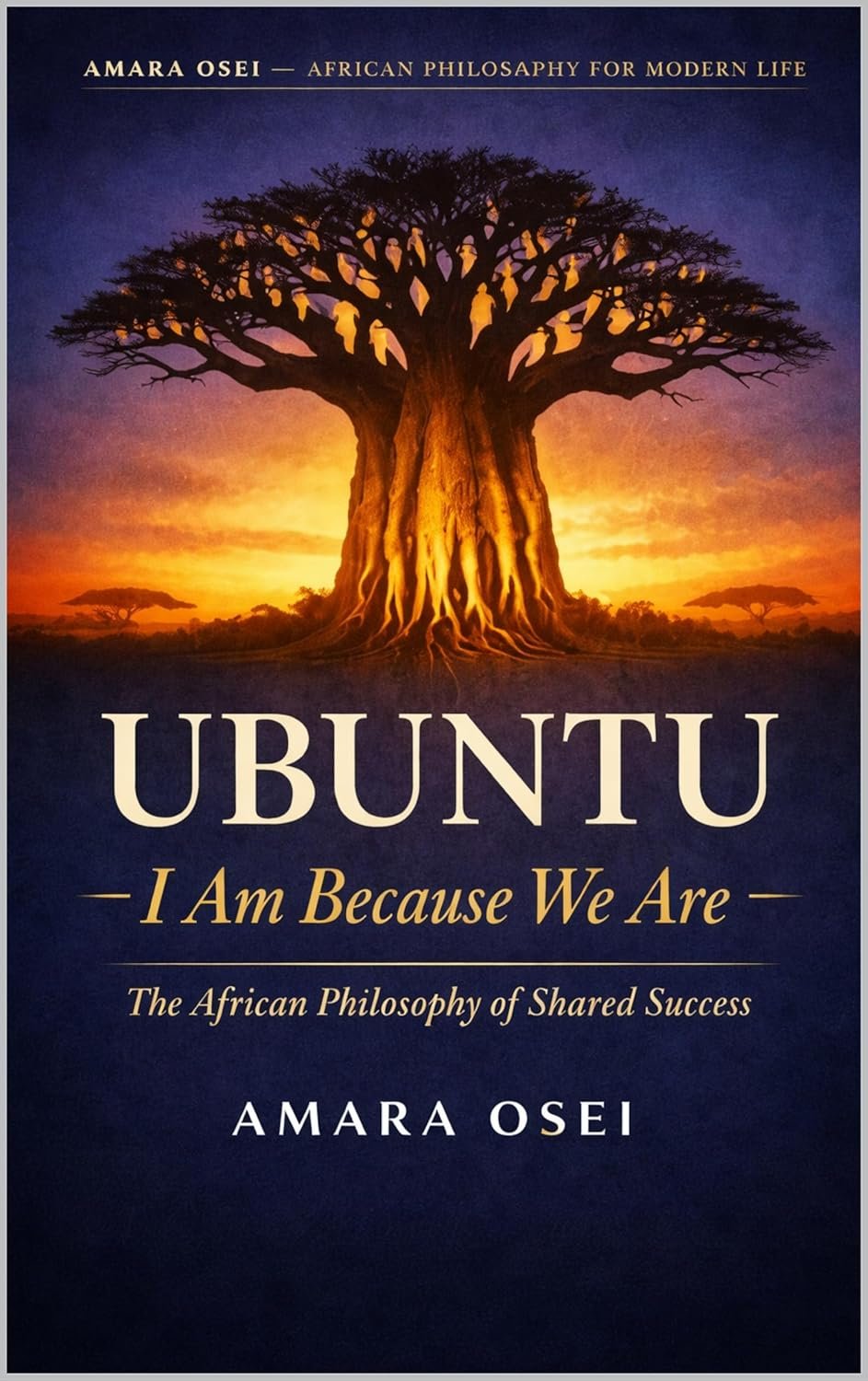
The full philosophy, as a book
The full philosophy of shared success — across leadership, conflict, accountability, and the digital age.
Read on Amazon