If you have heard Ubuntu only in the context of corporate diversity training or a viral leadership quote, you have not really heard Ubuntu. Ubuntu vs the Hustle? The version of the word that survives in Southern Africa is older, stranger, and more demanding than the version that travels.
What Ubuntu Actually Means
Translators usually settle on something like: Ubuntu, in its most cited form, is captured in the Nguni phrase 'umuntu ngumuntu ngabantu' — a person is a person through other people. It names a worldview in which the self is not a fortress but a node in a network, and in which dignity, identity, and success are inherited from and accountable to community. It has shaped post-apartheid South Africa, modern leadership theory, and increasingly the way thoughtful organisations think about teams. It is a defensible translation. But translation is the surface. Ubuntu carries underneath it a set of assumptions — about what a person is, what owes what to whom, and what success even means — that the English sentence cannot deliver.
Motho ke motho ka batho.Sotho — A person is a person because of others.
The Question This Post Is About
Two visions of effort: the hustle, and the pulled-together Ubuntu version of work. The question is worth taking seriously, because Ubuntu is one of those concepts that loses its shape when handled carelessly — and recovers it as soon as the reader is willing to slow down and listen.
The most concrete way Ubuntu shows up in working life is in how a manager handles failure. The Western reflex is to find the responsible individual, document the failure, and move on. Ubuntu insists on a slower, harder question first: what did the team make possible, and what did it fail to prevent? The shift sounds soft. It is not. Hiring decisions are made by the team the new person will work in, not the manager alone.
A Second Angle
The comparison is not symmetric. Ubuntu did not develop in dialogue with the Western frameworks it now sits beside on a bookshelf. It developed inside Bantu life, answering questions that Bantu life kept posing. To ask whether Ubuntu is "better than" individualism, or stoicism, or productivity culture, is to ask the wrong question. The right question is narrower and more useful: what does Ubuntu see clearly that the framework I currently use does not? Hiring decisions are made by the team the new person will work in, not the manager alone.
Where the Concept Resists
Ubuntu is sometimes presented as the answer to the diseases of Western individualism. It is not, exactly. It is a different answer to a different question. Pretending it is a drop-in replacement for the modern self-help bookshelf does Ubuntu a disservice — and the reader, too. The work of taking it seriously is harder than that.
What to Do With This
There is no certificate at the end of Ubuntu. There is only the slow accumulation of choices made differently — meetings shaped differently, relationships tended differently, decisions weighed differently. The reward is not visible. The cost is real. Over time the difference becomes a kind of life.
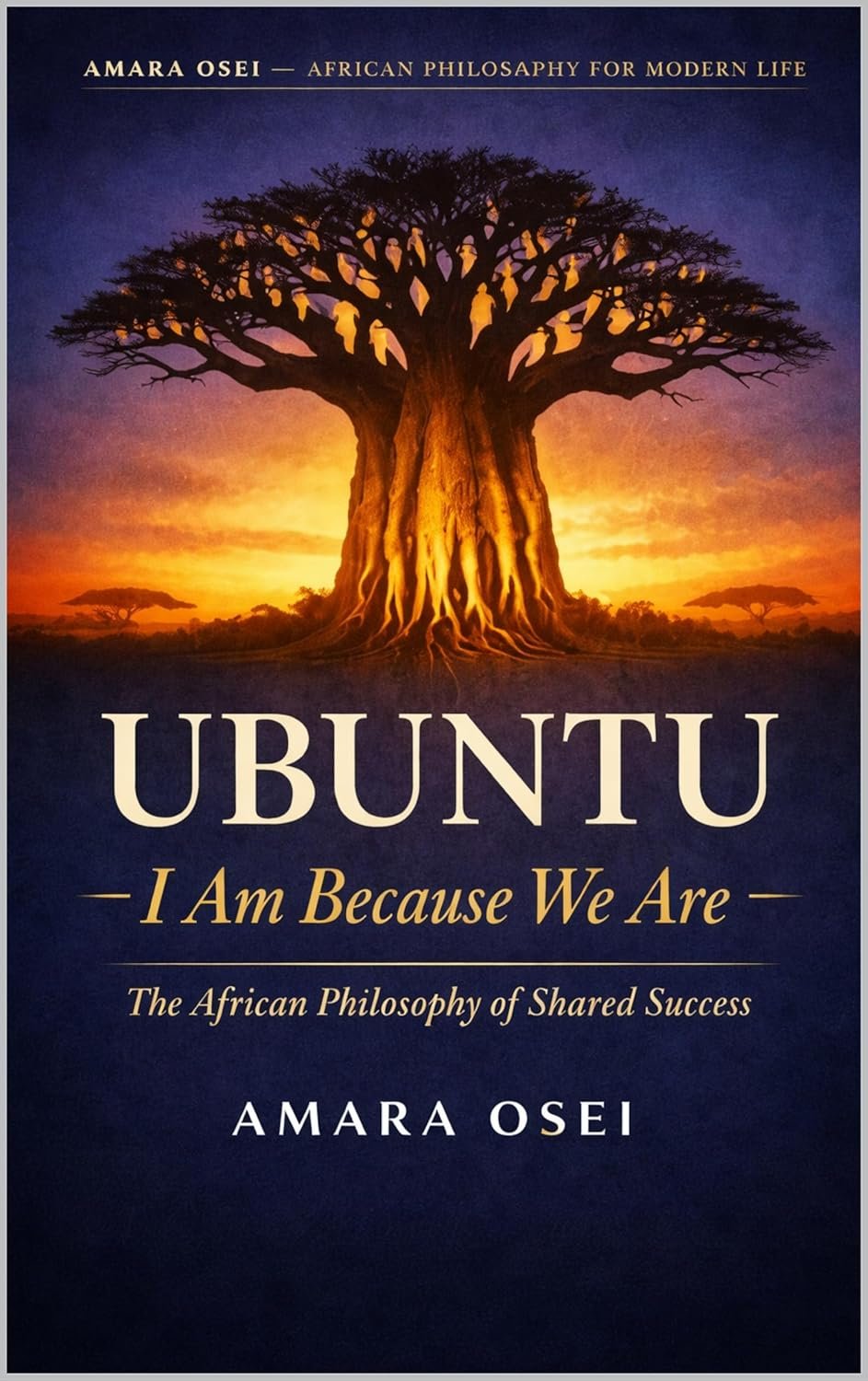
The full philosophy, as a book
The full philosophy of shared success — across leadership, conflict, accountability, and the digital age.
Read on Amazon