I want to begin with a memory that is not mine but has been told to me many times. A young woman, on her way to the river, drops her water-pot. She walks on. Her grandmother, watching from the path, calls her back. The pot is broken; there is no point. The grandmother shakes her head. 'You did not return,' she says. 'That is the loss, not the pot.' Whether or not it ever happened, the memory teaches what Sankofa is — better than any definition does. Sankofa vs Self-Made Success? The story is the answer.
What Sankofa Actually Means
The most commonly cited definition: Sankofa is an Akan word and a symbol — most often a bird with its head turned backward, holding an egg in its beak. The egg is the future; the head turned backward is the past. Together they teach a simple, demanding idea: it is not wrong, nor shameful, to go back and fetch what you forgot. The future cannot be built on amnesia. That sentence is true, as far as it goes. It is also incomplete. Sankofa is held inside a wider Akan grammar — a set of related concepts, social practices, and proverbs — that the standalone definition cannot carry.
Wisdom is like a baobab tree; no one individual can embrace it.Akan
The Question This Post Is About
The myth of the self-made — and what Sankofa corrects without dismissing effort. The question is worth taking seriously, because Sankofa is one of those concepts that loses its shape when handled carelessly — and recovers it as soon as the reader is willing to slow down and listen.
If you take Sankofa seriously at work, the first thing that has to change is the meeting. Not its agenda — its shape. Western meetings are optimised for speed and for the loudest contributor. Sankofa is optimised for something else: for the quality of decisions that hold. The first hire of any new venture is someone older who has done it before. The trade-off is real. Meetings under Sankofa take longer. The decisions also unstick less often.
A Second Angle
The comparison is not symmetric. Sankofa did not develop in dialogue with the Western frameworks it now sits beside on a bookshelf. It developed inside Akan life, answering questions that Akan life kept posing. To ask whether Sankofa is "better than" individualism, or stoicism, or productivity culture, is to ask the wrong question. The right question is narrower and more useful: what does Sankofa see clearly that the framework I currently use does not? The first hire of any new venture is someone older who has done it before.
Where the Concept Resists
It would be dishonest to pretend Sankofa is uncomplicated. The concept can be — and has been — used to suppress dissent in the name of harmony, to extract unpaid labour from women in the name of community, and to soften criticism that should have been sharper. Any serious reading of Sankofa has to hold these uses in view. The concept survives the criticism. But it is not innocent.
What to Do With This
The reading you have just done is one entry into Sankofa. There are many others. Akan elders, Ghana, West Africa writers, and the daily life of communities that have lived this concept for centuries are richer sources than any essay. Treat this as a doorway, not a destination.
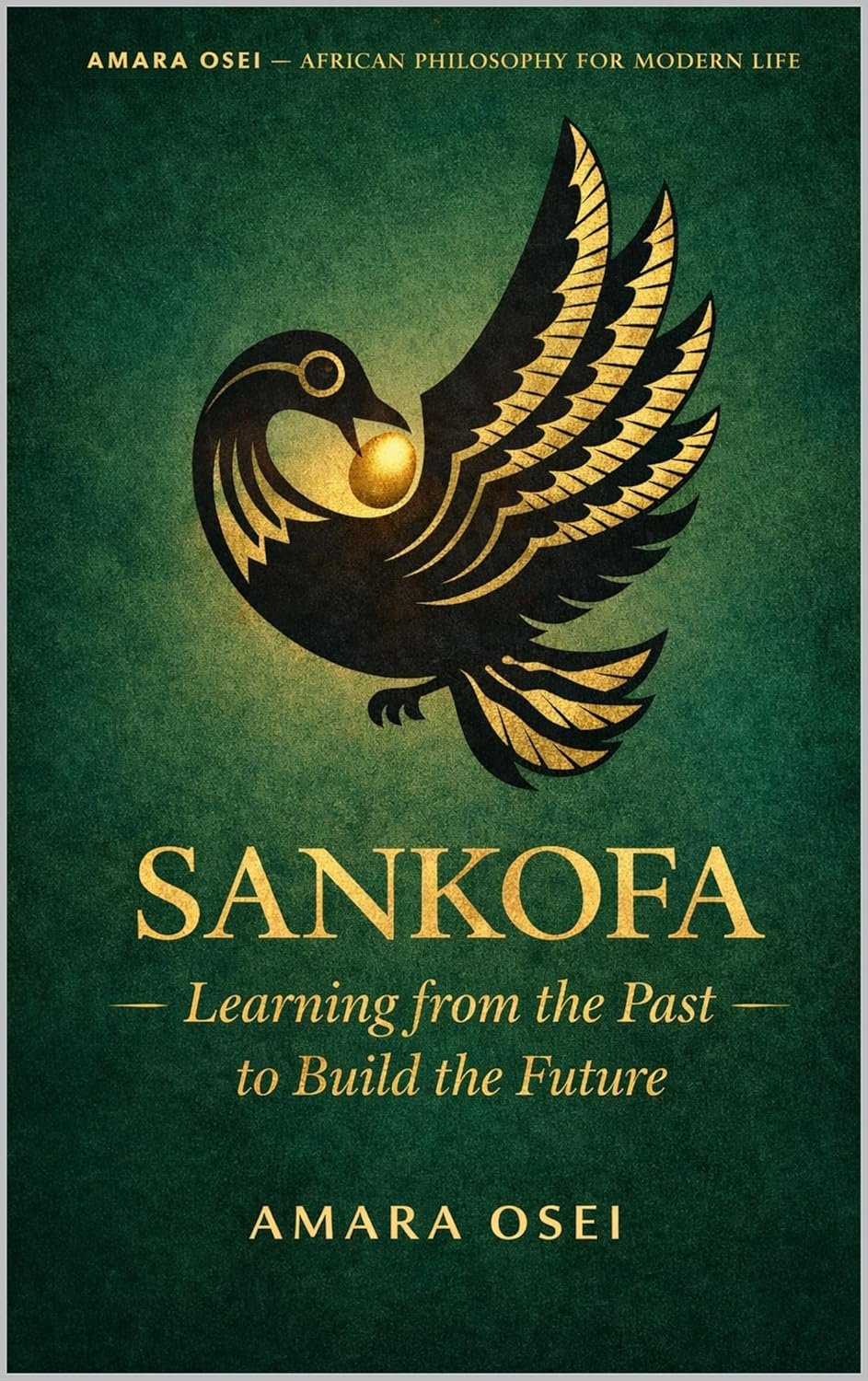
The full philosophy, as a book
How to use your history, your failures, and your traditions as fuel rather than baggage.
Read on Amazon