Three Ways to Misunderstand Sankofa? It is the kind of question that admits of two answers — a quick one and a true one. The quick answer is that Sankofa means go back and fetch it. the akan wisdom that you cannot move forward well without recovering what was left behind. The true answer takes longer, because Sankofa is not really a concept; it is a way of seeing.
What Sankofa Actually Means
Let me give the canonical definition first, then try to do a little better. Sankofa is an Akan word and a symbol — most often a bird with its head turned backward, holding an egg in its beak. The egg is the future; the head turned backward is the past. Together they teach a simple, demanding idea: it is not wrong, nor shameful, to go back and fetch what you forgot. The future cannot be built on amnesia. The canonical version is correct but tame. The full version of Sankofa is less polite, more demanding, and more interesting. It does not flatter the reader who has just discovered it.
A river that forgets its source will dry up.Yoruba
The Question This Post Is About
The most common mistakes outsiders make about Sankofa, and how to avoid them. The question is worth taking seriously, because Sankofa is one of those concepts that loses its shape when handled carelessly — and recovers it as soon as the reader is willing to slow down and listen.
The most concrete way Sankofa shows up in working life is in how a manager handles failure. The Western reflex is to find the responsible individual, document the failure, and move on. Sankofa insists on a slower, harder question first: what did the team make possible, and what did it fail to prevent? The shift sounds soft. It is not. Every project begins by reading the postmortems of the previous three.
A Second Angle
The most concrete way Sankofa shows up in working life is in how a manager handles failure. The Western reflex is to find the responsible individual, document the failure, and move on. Sankofa insists on a slower, harder question first: what did the team make possible, and what did it fail to prevent? The shift sounds soft. It is not. Every project begins by reading the postmortems of the previous three.
Where the Concept Resists
It would be dishonest to pretend Sankofa is uncomplicated. The concept can be — and has been — used to suppress dissent in the name of harmony, to extract unpaid labour from women in the name of community, and to soften criticism that should have been sharper. Any serious reading of Sankofa has to hold these uses in view. The concept survives the criticism. But it is not innocent.
What to Do With This
The reading you have just done is one entry into Sankofa. There are many others. Akan elders, Ghana, West Africa writers, and the daily life of communities that have lived this concept for centuries are richer sources than any essay. Treat this as a doorway, not a destination.
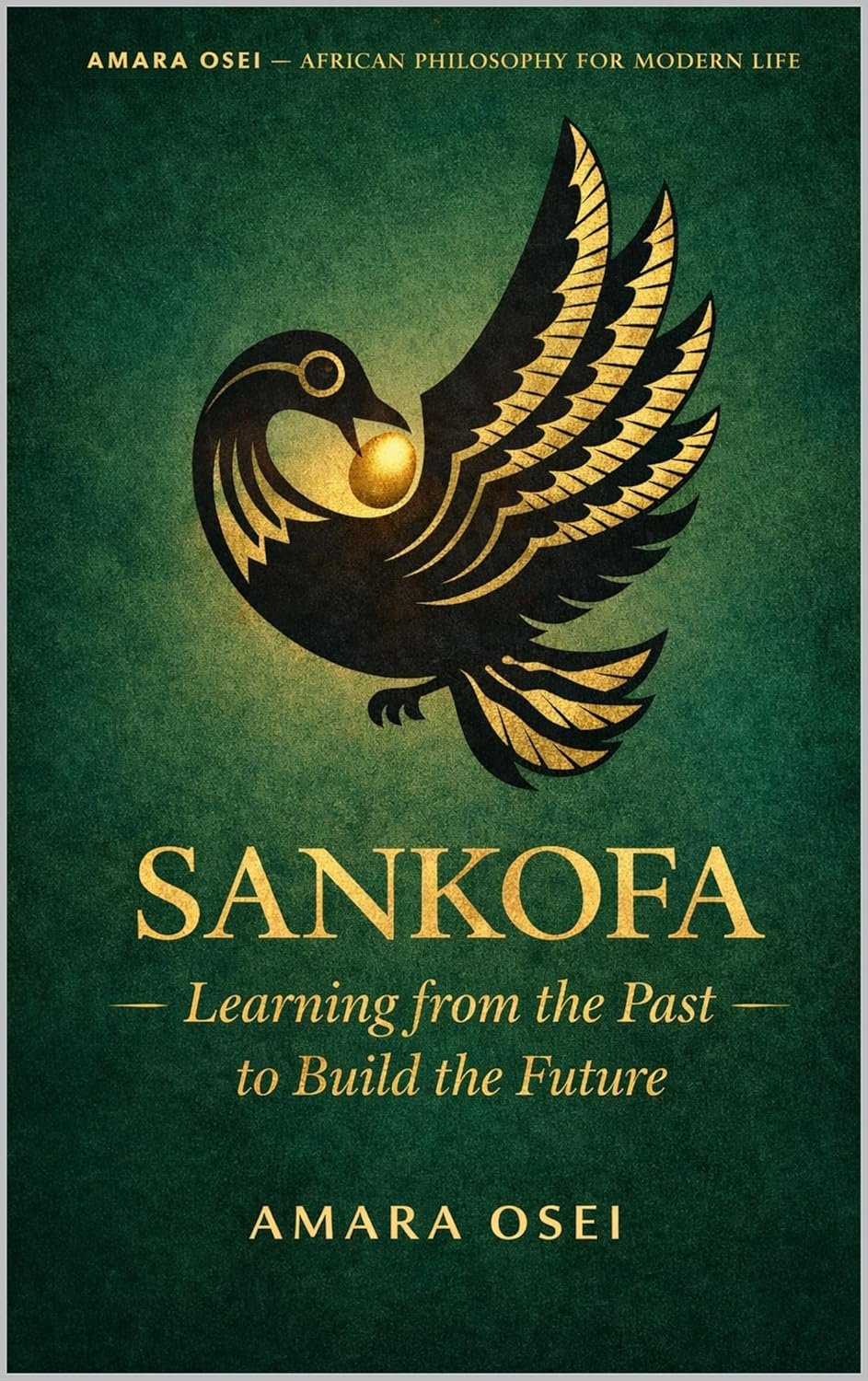
The full philosophy, as a book
How to use your history, your failures, and your traditions as fuel rather than baggage.
Read on Amazon